A Spring Poem by Bhaktivinoda Thakura's Uncle

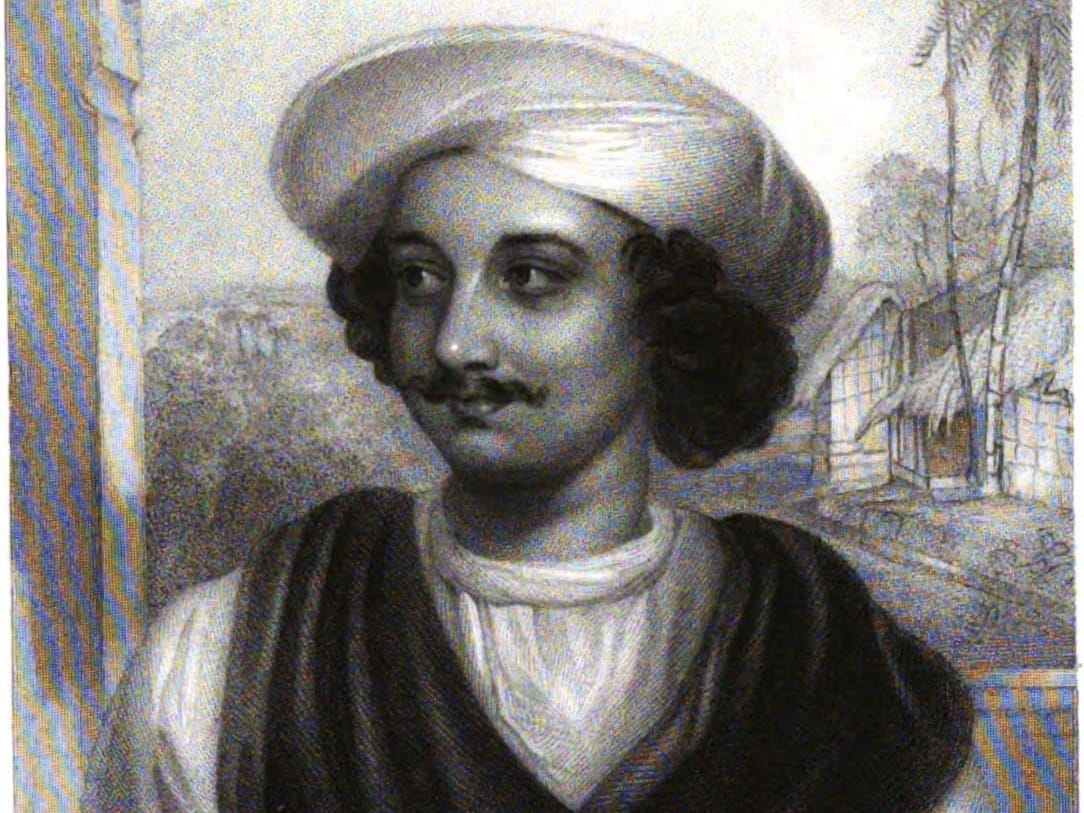
Kashiprasad Ghosh was the first Indian to publish a volume of his own English poetry. He was also the maternal uncle (by marriage) of Śrīla Bhaktivinoda Ṭhākura. Ghosh recognized the Ṭhākura's brilliance and took him under his wing from a young age, persuading his mother to let him live and study in Calcutta, where the Ṭhākura flourished among the mid-19th century intelligentsia.
Kashiprasad Ghosh's masterful English poems, presented in his 1830 The Shair and Other Poems, convey startlingly pure and profound sentiments of devotion. These were perhaps the first traces of pure Gauḍīya Vaiṣṇava poetry to reach the Anglo-Indian audience. Ghosh is quoted as saying he preferred to write in English as he could better express himself in English than in Bengali!
Note: "[...]" indicates where scanned image had cut off portions of text.
Dola Yātrā
Or a festival in commemoration of the swinging of Krishna in the cradle while a child.
[Celebrated during Holi]
I.
Herald of spring, the southern gale,
whispers soft thro’ every vale,
Proclaimeth spring’s return;
[…] wakes the blighted plants of bowers,
[…] magic touch to bloom with flowers,
Beneath the solar urn.
II.
Bright with the beams of coming even,
glowing yonder western heaven,
Which many a hue combine;
[…] if it were a heavenly dome,
[…] ere in her variegated home,
Would fancy love to shine.
III.
Sweet pleasure breathes in every tone
Beasts, within these woodlands lone,
Or birds that wander gay;
As ’twere a farewell to the sun,
Whose race of splendour hath been run—
Who now hath fled away.
IV.
Where yonder rosy-bosomed waves
O’erflow the cool and coral caves
Of sacred Jumna’s tide;
And make a music sweet and soft,
As on they travel, dimpling oft,
In solemn, sullen pride.
V.
And now full many a youthful dame,
Born in that race, whose might fame
Hath flown in every way,
Came round the cradle where the boy,
The flower—the hope—the pride—the joy
Of Nanda, resting lay.
VI.
And as with frolicks, lisps and smiles,
The infant god his time beguiles,
They swing him oft again;
And in the One Eternal’s praise,
Their voices sweet harmonious raise,
Combined with music’s strain.
VII.
And all is fair and all delight,
As though they made the evening bright,
With pleasure’s sunshine glow;
As though they meant to banish all
The cares and sorrows, that appal
This hapless world below.
January 4, 1830